FlemingClans.com

"Scotland's Fleming Clan: a Genealogical History" - coming in 2027!
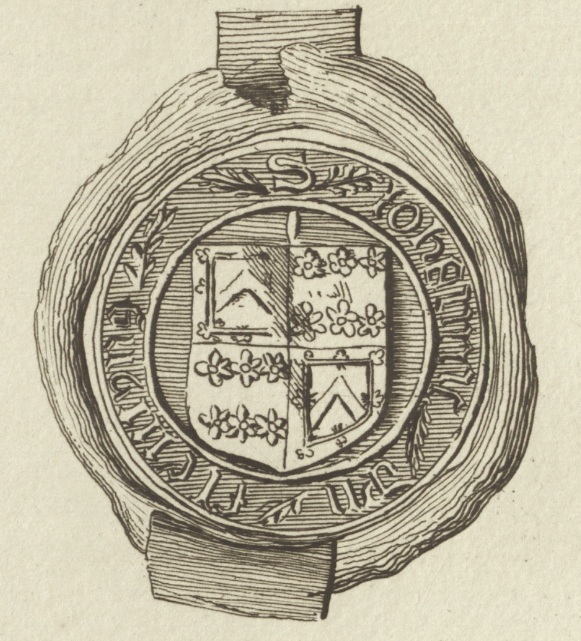 13th chief - John Fleming, 2nd Lord Fleming
(c1465 - 1524)
Basic information about this person: \click here\
John, 2nd Lord Fleming, grandson of the first Lord, was a seaman, ambassador and Lord Chamberlain who stood at the centre of Scottish government after the disaster at Flodden. His career ended with his murder by the Tweedies of Drumelzier in 1524.
A troubled inheritance
John was born around 1465, a son of Malcolm Fleming of Monycabock and Euphemia Livingstone, and grandson of Robert, 1st Lord Fleming. As a young man he backed Alexander, Duke of Albany, in his quarrel with his brother King James III, and on 11 June 1488 he fought with the rebels at Sauchieburn, where the king was killed.
His father and elder brother David both died before his grandfather, so in 1491 John inherited the lordship along with a mountain of debts and lawsuits. Over the next decade he was served heir in Lenzie, Cumbernauld, Biggar and the family’s other baronies, recovered Thankerton from the Kennedys in 1499, and mortgaged and then redeemed Biggar in the same year.
Vice-Admiral of Scotland
King James IV was building a navy, and John became one of its commanders. In 1511 he was vice-admiral of a fleet sent to help the French, and in 1512 and 1513 he captained the Margaret, one of the great ships of the Scottish fleet, as vice-admiral of thirty-eight ships carrying three thousand troops to France. He was therefore absent when the king and much of the Scottish nobility were killed at Flodden on 9 September 1513.
After Flodden
John was one of the surviving lords who held the kingdom together. In November 1513 he was at the General Council at Perth, which named him ambassador to King Louis XII of France. He became a Privy Councillor in 1514, and in 1515 he was appointed Lord High Chamberlain of Scotland and given a share in the keeping of the infant King James V. In August 1515, with the Earl Marischal and Lord Borthwick, he held the young king and his brother in Stirling Castle with seven hundred troops.
He was a close ally of the Regent, John, Duke of Albany. In 1520 he went as ambassador to King Francis I of France with detailed instructions to secure Albany’s return, and he came back with him in 1521. In 1524 he joined most of the nobility in turning against Albany and resigned as Chamberlain. Later that year he was imprisoned for two months before being released by Queen Margaret Tudor and the Earl of Arran.
Murder at Biggar
On 1 November 1524 John was killed by John Tweedie of Drumelzier, his son James and others, in a feud over the wardship of the heir of Fruid, which John had sought from the crown. The Flemings and Tweedies settled the killing by an indenture of assythment, or compensation, at the Cross of Peebles later that month, but the feud between the two families continued for years.
Family and legacy
John married first Euphame Drummond, mother of his heir Malcolm, and later Margaret Stewart and Agnes Somerville. His other children included James, a page of honour to the king, Margaret, Elizabeth, and Malcolm, Prior of Whithorn. His nickname, “the Ambassador”, reflects a career that took the Flemings to the heart of Scottish government and diplomacy.